FabriTell
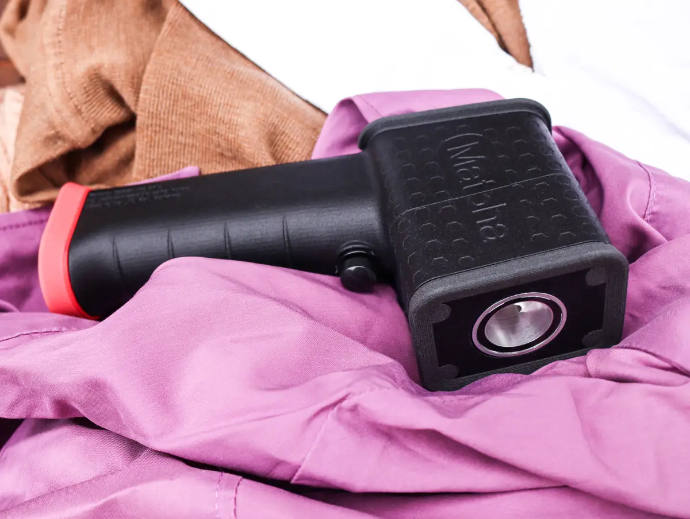
Textile Scanner
Identifies 10 pure fibres and 12 blends in under 1 second using NIR reflectance spectroscopy. Know what's in every bale, grade higher, earn more per tonne.
See FabriTell in under 1 minute.
Watch how FabriTell reads fibre composition in under a second, right on the sorting floor, no lab needed.
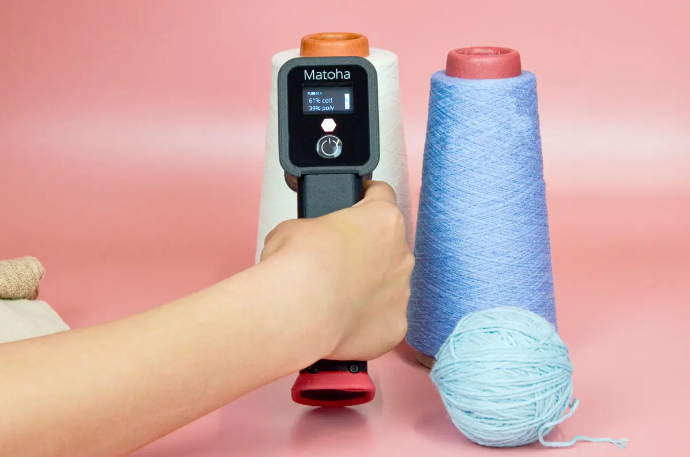
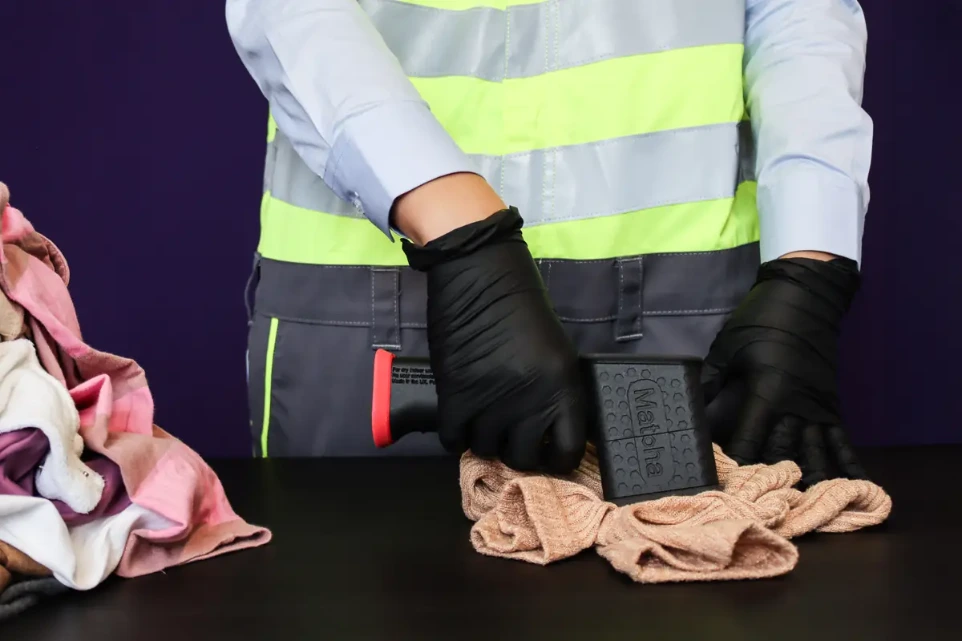
Instant fabric identification - just present the sample
Our devices are super-easy to use, accessible to your regular staff - no PhD required. They are also incredibly fast, allowing you to identify materials quickly.
Identification in less than a second
No sample preparation needed
Only minimal training required

All key materials are supported.
The devices come with state-of-the-art algorithms built in - no need to purchase them separately or build it yourself. The device identifies the textile blend and determines the % of each component.
Support 10 pure materials (cotton, polyester, polyamide/nylon, elastane, viscose, acrylic, silk, acetate and polypropylene)
Support the 12 most common textile blends
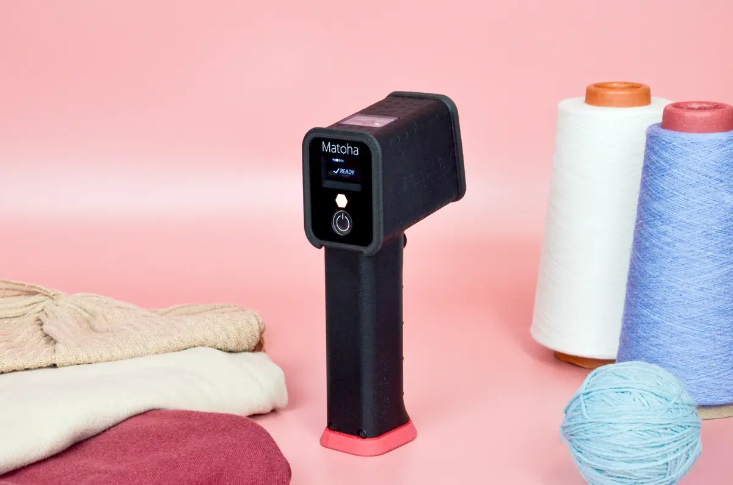
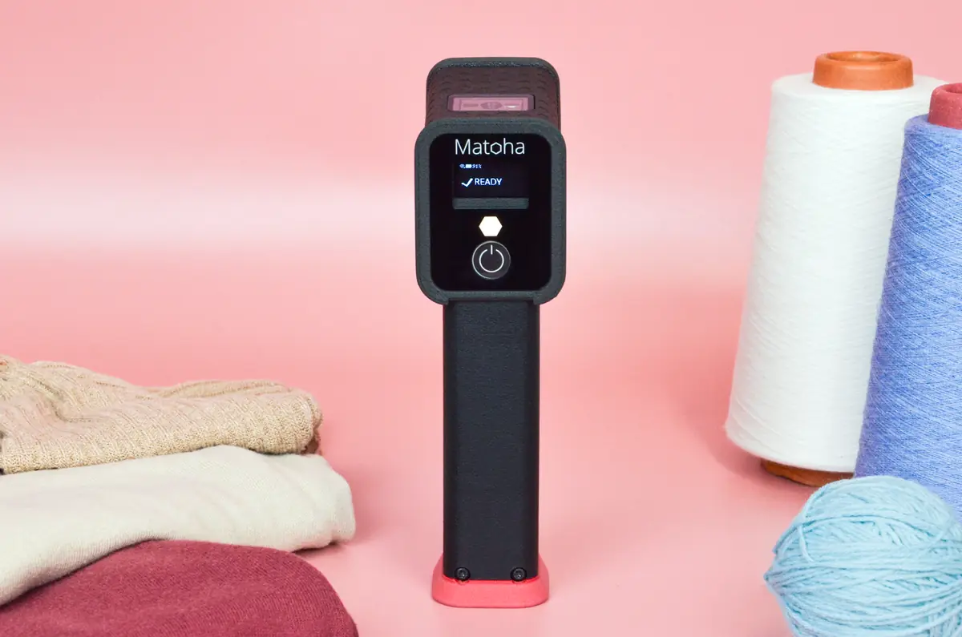
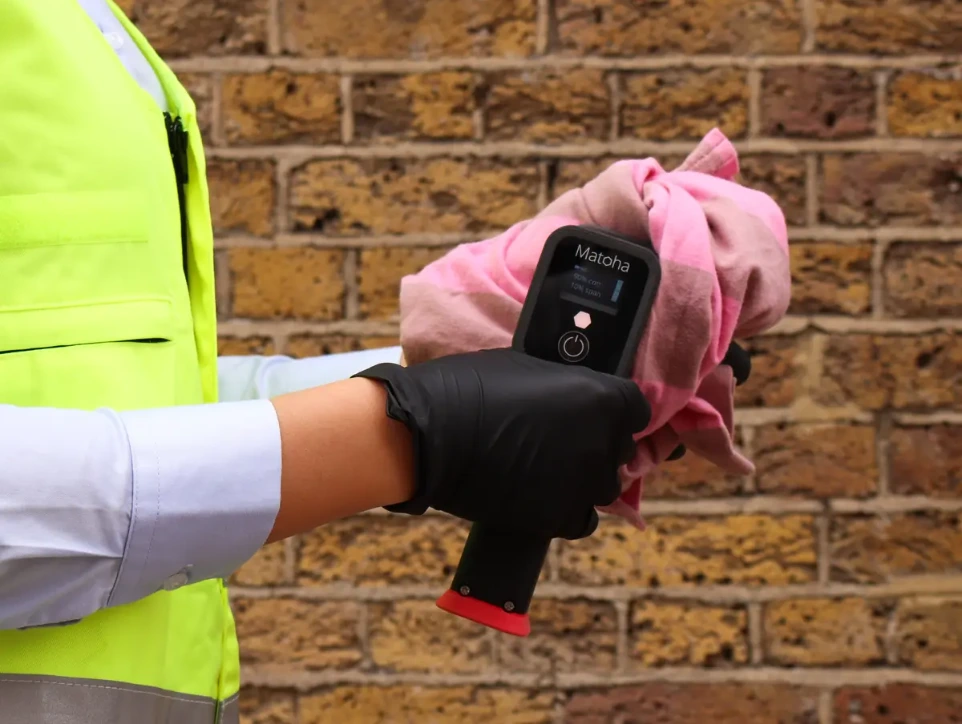
Programmable LED to speed up sorting - program it to show specific colour for specific composition, such as white for polycotton (image right).


Mobile app, Cloud & reporting
Control the devices & save data with our free mobile & tablet app. With a subscription, you will also gain access to our cloud from where you can export detailed reports and access your data over API.
Technical specifications
FabriTell Handheld | FabriTell Bench | |
Materials supported | 10 pure materials, 12 blends - see here | (same) |
Identification time | 1 second | 0.5 second |
Measurement principle | Reflective NIR spectroscopy, 1550-1950 nm with AI identification algorithms | (same) |
Connectivity | Wi-Fi (2.4 GHz, to our cloud), Bluetooth | Wi-Fi, Bluetooth, USB serial port, RS485*, UART*, CAN* bus (*on request, extra fee) |
Battery | rechargeable and replaceable, ~12 hours of non-stop measurements | none |
Power | Charge via USB-C, supplied international USB adapter. Max. power input 15 W. | (same) |
Size | 17x8x5 cm (6.7x3.2x2 in) | 15x12x6 cm (5.9x5.5x2.4 in) |
Weight | 360 g (12.7 oz.) | 650 g (23 oz.) |
Accessories | Belt holster, robust carry case (included), additional batteries (optional) | External screen with 1m cable, mounting plate and mounting fasteners (included) |
Talk to our team.
See results in 30 minutes.
Your materials. Our technology. See a demo in 30 minutes.
London-based · 21-day money-back guarantee · Ships worldwide
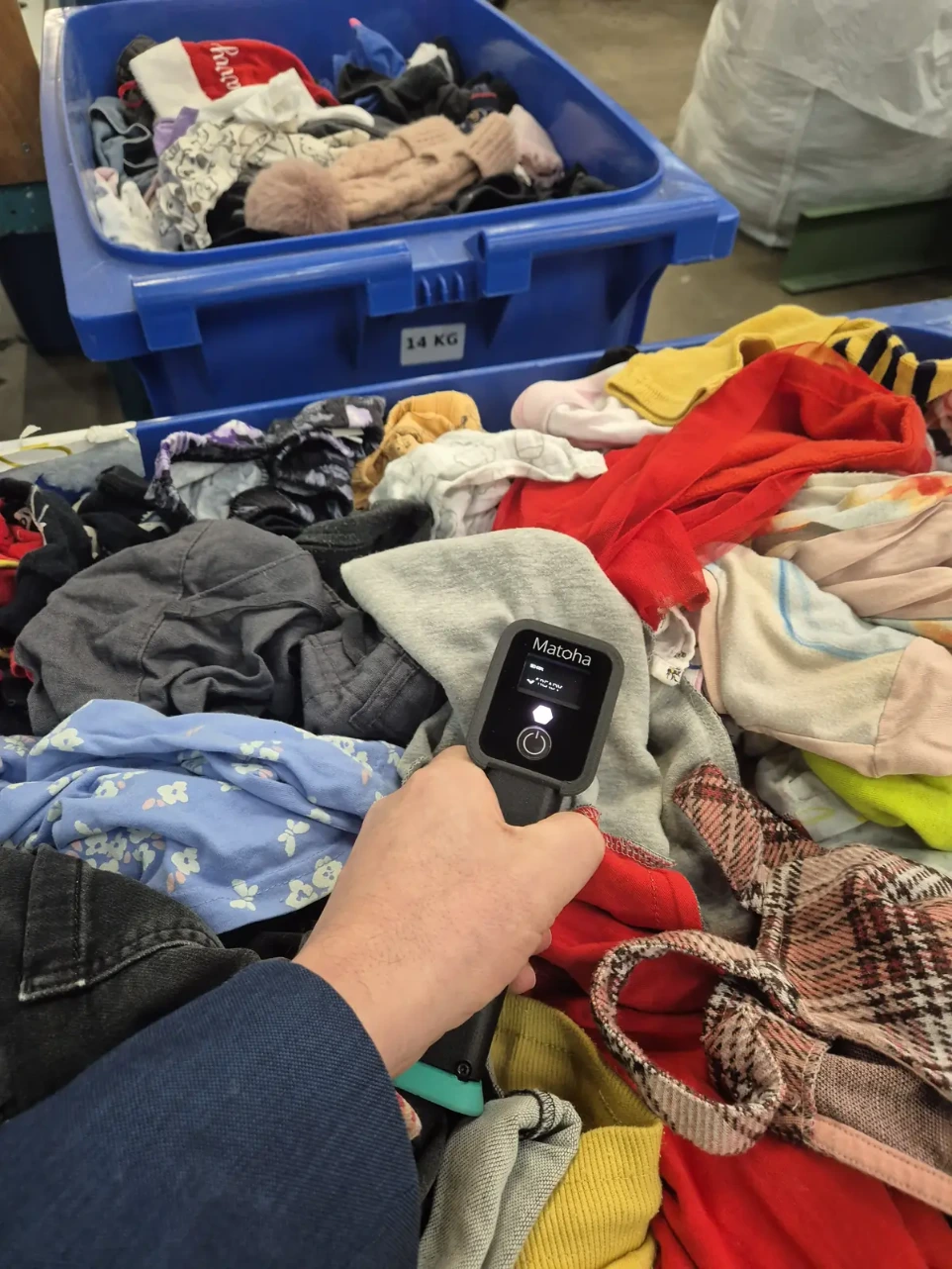
Sorting demo
This video demonstrates how rapidly and effectively the FabriTell scanner recognises textile materials.
Frequently asked questions
Here are some common questions about our company.
This is easy - please head to our Shop. You can select which device and which subscription you need. To get a quote, please simply select “Quotation only” payment method after you click checkout.
The best way to reach us is by filling in the form on the Contact us page.
Your Matoha device warranty lasts 12 months from the date of delivery (or continuously, if you opted for a subscription), during which we’ll replace or repair our machines which are damaged or defective due to faulty materials, workmanship, or design. There are some exceptions where the warranty will be void, such if you disassemble the machine – for full T&Cs please see our Terms of Sale.
Please have a look at our detailed explanation here.
For accurate results the Measurement Guidelines need to be followed at all times.
If the sample is pure, we expect that in >95% of cases it is recognised correctly. If the sample is a supported blend, we expect the device to recognise it if there is at least 5-25% of the second component.
This 5-25% range exists because different blends have different detection limits; for instance, for elastane in cotton or polyester it is close to 5%, whereas for viscose in cotton it is on the higher end, 25+%.This is because some materials are more similar than others - cotton and viscose are extremely similar in their chemistry (hence also infrared spectra), therefore it’s more difficult to identify them.
Please note that NIR sensing is surface based - if the fabric is multi-layer, only the top material will be identified - but if you wish to identify the inside as well, you can simply measure it, too. There might be a small number of samples the device is unable to identify, in which case it would say “unknown”. It should be noted we cannot guarantee that every single sample is identified accurately; if you need this level of identification accuracy, thorough lab-based analysis using multiple techniques might be more suitable.
Contact Us
We'd love to hear from you! Whether you have questions, feedback, or need support, our team is here to help. Simply fill out the form, and we aim to respond to all enquiries within 24 hours. Thank you for getting in touch!