Client testimonials
Have a look at what our customers say about us!
We chose to invest in 3 PlasTell devices in order to help with the research we are doing at Plymouth for the INdIGO Interreg Project. We found the device so easy to use and able to take out onto the field with us to quickly identify fishing gear material and help with the recycling efforts here in the south of England. (via LinkedIn)
Highly compact, accurate and low-cost sensing - These three keywords describe our NIR PlasTell very well. At Omnicycle we use our NIR Sensing module to identify the different kinds of plastic which have been assigned to us by our customers. The PlasTell scans the plastic and accurately reveals the specific involved material. via LinkedIn

At Wargön Innovation , we work, among other things, on development projects related to AI and automation. In this work, various sensors play a crucial role in enabling automated sorting of textiles. One of these sensors is NIRS, which is used to analyze the textile composition of collected and discarded textiles. Our handheld FabriTell scanner from Matoha assists us in demonstrating and developing automated textile processes by being simple and portable.
Developed by Matoha Instrumentation Ltd., with training conducted by Fashion for Good - this handheld FabriTell device will change the game in sorting. Within seconds, it displays the fabric compositions of the textile scanned, with precision. It lights up a different colour for different fibres (a fabric displaying purple light can be tossed into a purple sorting bucket).With this, we don't need burn or any other tests conducted on each bale of pre-con waste or each individual fabric in case of post-con waste. It'll now be a matter of seconds(

1. Performance: On a scale from 1-10; I would rate it an 8. I think the only issue was the need for a plug point every time we needed to use the analyser. However, I saw your devices now come with a built-in battery so that should be a 10 now.
2. Ease of Use: The machine is extremely user-friendly, and anyone can use it. I love that it has an app that stores all previously analysed data. Also, the incredibly useful feature is that we can reprogramme the led to display a colour based on the plastic. For example, we use red if it's a plastic that we cannot process.
3. Accuracy: I have tested the accuracy by using known plastics and it was able to accurately determine the type of plastic each and every time.
4. Integration: We are able to use the analyser to determine the waste plastic we receive before we use it in our process. This prevents the use of incorrect plastic that could result in a dangerous situation.
5. Support: On a scale from 1-10; I would rate it a 10. The team was able to help me and reset the machine when I had an issue, and they were very efficient. — Review of PlasTell.
Yodomo is excited to be one of the first in the world to apply new textile identification technology from Matoha Instrumentation Ltd. Textile identification is going to play an important role in increasing the chances of onward use of unused textiles thereby reducing waste. Through applying this technology in our Innovate UK KTN Transformative Technologies R&D project, we are able to more quickly identify textiles, consider the options for their onward reuse by maker communities(for example, natural dye communities need natural fibres), or by fibre-to-fibre recyclers (for example, iinouiio: Recycled Textiles which creates new yarns through reusing wool), and improve existing systems avoiding textiles from being unnecessarily sent to landfills or incineration • via LinkedIn
I am very sensitive to synthetic fabrics and found recently that labels often do not tell the truth when they say “100% cotton.” I did quite a bit of research and found that the FabriTell unit offers the best balance of features including software updates and portability. I can now verify the fabric composition of various items and ward off allergic reactions to certain garments. I'm so passionate about this that I wanted to share this service with others.
The PlasTell machine has been performing brilliantly. Results are accurate and within seconds. We have used the machine extensively since we had it without any trouble so far. So no complaints in the product itself. In fact we might pick up a couple more for our other locations in 2023. (via LinkedIn)
We use the FabriTell machine mainly for analysing production scraps from textiles. The device works well. It is useful and helps us with specific materials. We don’t need to use the machine all the time as we get the composition from our customers. However, when we don’t get the composition it is a very useful machine for us to be able to identify the fibre. (via LinkedIn )

This little device is an absolute game changer for us in the workshop. We get a huge amount of plastic donated to us, a lot of which have resin codes, however there’s also a lot that comes in completely unmarked, so we have no idea what type of plastic it is and whether or not we’re able to recycle it. Fortunately, the PlasTell by @matohasciencesorts that issue out for us.

The PlasTell is performing perfectly, and we are thrilled with the ease of use and the measurement speed.
We have a FTIR in the lab but it’s difficult to train people on and takes time and knowledge to accurately identify materials. Your device has reduced the time it takes to identify contamination issues and means I don’t have calls and messages at night anymore. It’s also been the simplest training package I have had to deliver.
Many thanks for sorting this for us.
Our production manager already is using the PlasTell device and his comment is that we should have bought one earlier!.
We love using the PlasTell, it's been an absolute game changer! This nifty device means we can identify plastics quickly and easily. This allows us to recycle plastic with confidence, bringing it into a closed loop system and working with partners to create beautiful assets!
This nifty little machine from @matohascience (PlasTell) can identify different types of plastic. We mostly recycle plastic that we collect on beaches and often, the pieces are either not labeled, the labels are worn off or we just find parts of a once whole product that does not have a label.
To recycle plastic waste from various sources, it must be sorted and therefore identified. This sorting is sometimes possible if the waste has these small symbols: ♻️ accompanied by a polymer number and/or acronym. But when we do collect waste, it is not sorted and is sometimes in the form of fragments, impossible to identify. That's why we used a little magic object: an NIR (near-infrared) spectroscopy scanner.A big thank you to Matoha Instrumentation Ltd. who developed this little gem!• via LinkedIn
We use PlasTell in our lab on a daily basis, to identify polymers. It’s in use 24/7. It works well and we didn’t have a problem with it so far. It’s very easy to use.Ladies in the lab find it very useful, as sometimes when they couldn’t identify some polymer, they have to light it and then the burnt flake was missing in the result weight.We didn’t need much support, but 1 time we did we found it very promptly and helpful.
Take a look at our devices in action around the world!
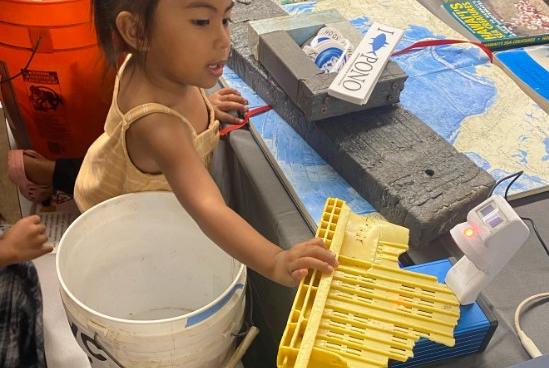
Ho‘omalu Ke Kai
PlasTell being showcased at Kekaha Elementary school in Hawaii, via Instagram.
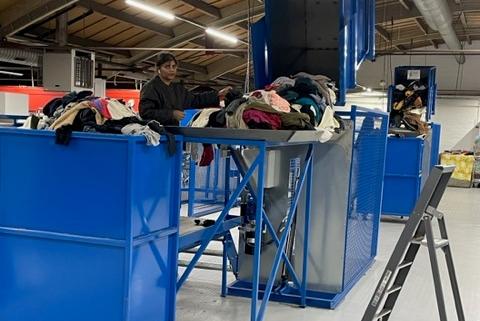
Kringloopbedrijf de Beurs
Textile sorting station using our Matoha FabriTell Bench device in the Netherlands.
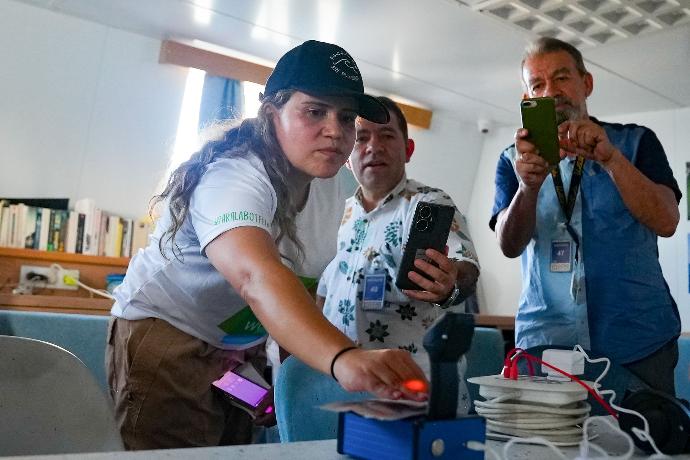
Plastic Odyssey
PlasTell demo in the Dominican Republic, held by Plastic Odyssey.
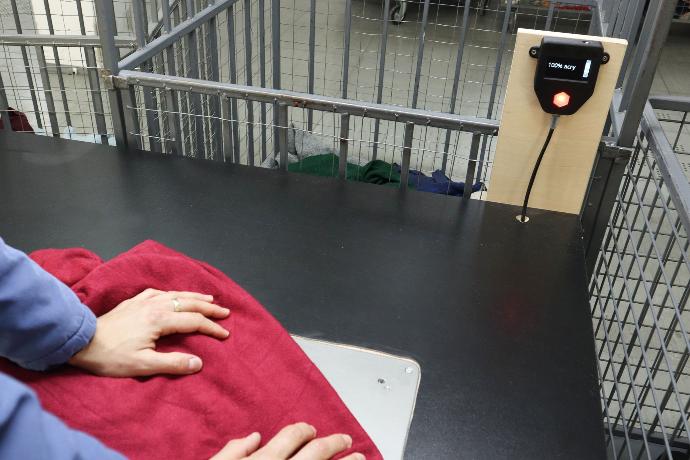
TexCycle
Matoha FabriTell Bench sorting pures and blended fabrics for recycling in Bulgaria, via LinkedIn.
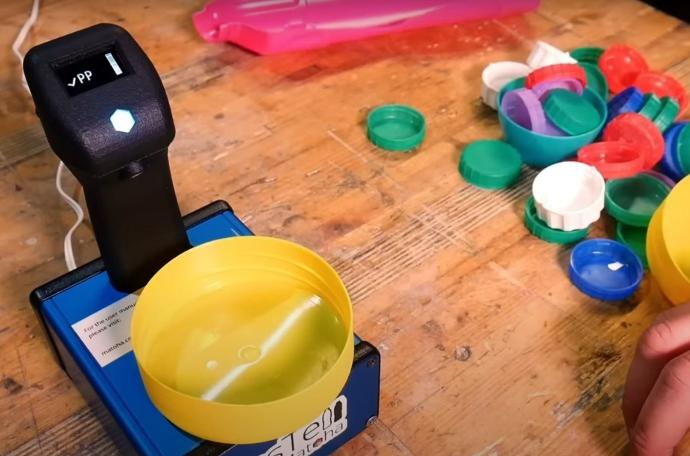
Brothers Make
Our PlasTell device being used to sort plastic waste, via YouTube.
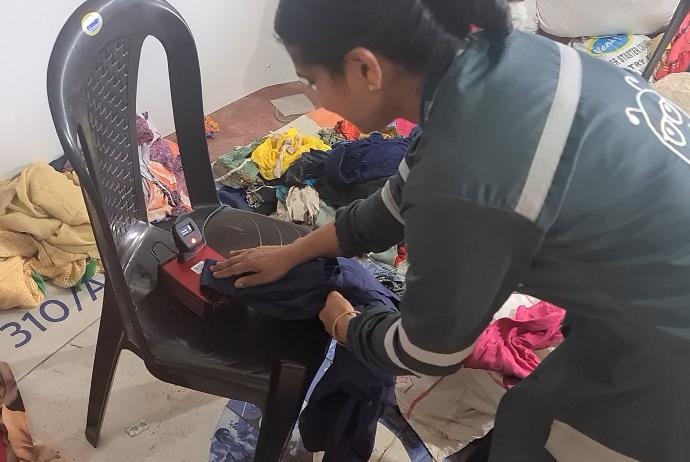
Green Worms
Our FabriTell device being used in Green Worms Waste Management Centre, on a recent trip to India.