
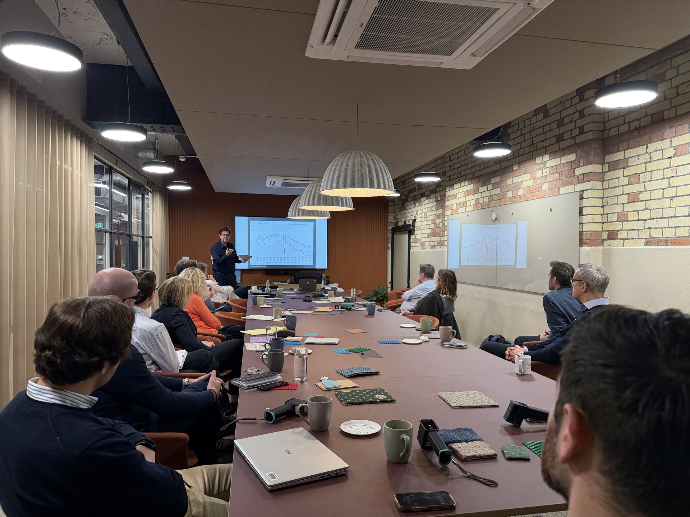
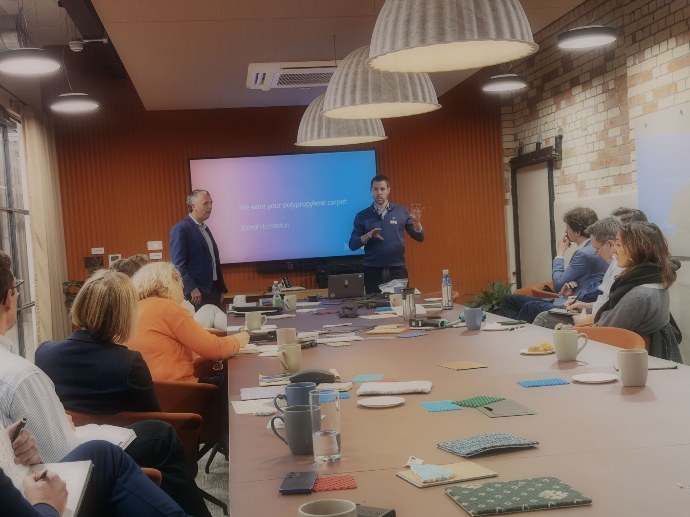
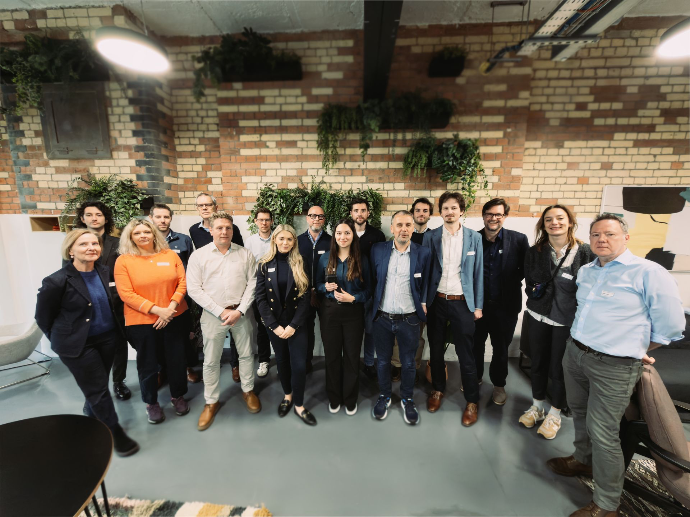
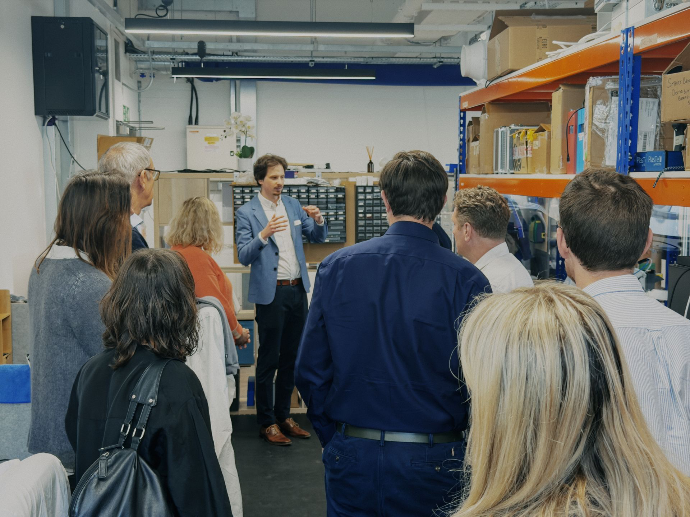
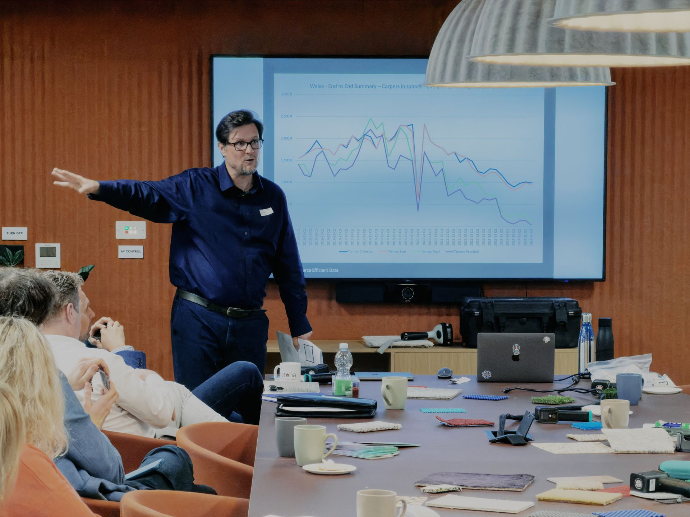
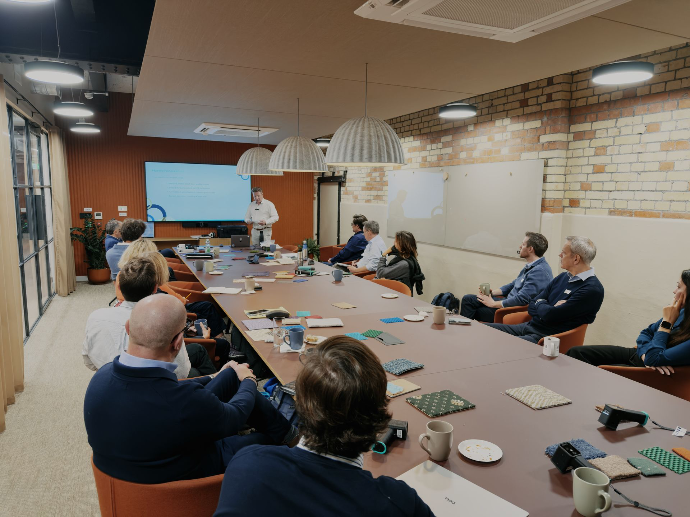
We brought together carpet recyclers, manufacturers, fitters, waste operators, and innovators with one simple aim: to look honestly at where carpet recycling stands today, and what it will take to make it work at scale. Not in five years, but now.
Hundreds of thousands of tonnes of carpet move through the UK every year. A significant proportion never even enters a recycling conversation. It goes straight into residual waste for incineration. Even when carpet is collected separately, too much of it still ends up incinerated. Not because people don’t care, but because the system does not yet function well enough to make the right decision the easiest one.
That is the gap we set out to address.
The morning focused on one core problem: how do you turn carpet from a costly waste stream into a material with value? That question runs through everything from collection and contamination, through to sorting accuracy, and ultimately whether there is a viable end market waiting on the other side.
What became clear, quickly, is that this is not a single problem. It is a chain of decisions. If material is not identified early, it gets mixed. If it gets mixed, it loses value. If it loses value, no one can afford to process it. And so it moves, almost inevitably, towards disposal.
When material is identified early, separated accurately, and directed with intent, something changes. Polypropylene carpets can move into real recycling routes. Nylon streams can begin to form. Polyester flows can be understood, not guessed. The economics start to shift enough to make better decisions repeatable.
Throughout the day, we demonstrated what on-the-ground material identification looks like in the hands of people making decisions every day. Live scanning of carpets, real-time material identification, and the ability to move from uncertainty to clarity in seconds.
We also opened the conversation beyond handheld tools. We shared a first look at how data capture, tracking, and automation can begin to reshape textile and carpet sorting more broadly. From garment-level understanding through to scalable sorting systems, the direction is clear: faster decisions, better data, and systems that support operators rather than slow them down.
Speakers and attendees did not pretend the system is working. They spoke openly about contamination levels, about missed collections, about the challenge of making recycling cost-neutral at a minimum. They talked about the reality that without more viable end markets, even the best sorting will struggle to hold.
When collection routes improve, when sorting becomes more accurate, and when material flows become predictable, markets begin to follow. Not the other way around.
With regulatory pressure increasing, and the cost of disposal set to rise, particularly as carbon accounting tightens, the industry does not need more awareness. It needs practical tools, working systems, and collaboration between the people already doing the job.
We are not at the centre of the conversation, but a contributor to it. Providing the tools that allow better decisions to be made earlier. Helping teams move faster, reduce uncertainty, and capture more value from the material already in front of them.
Because the opportunity is not hidden. It is already here, sitting in yards, in skips, in collection streams that have not yet been optimised.
If you were part of the conversation, thank you for bringing your experience, your challenges, and your ideas into the room. If you were not there, the door is open there is room for more of us at the table