How to Perform Measurements (Handheld)
PlasTell:
FabriTell and CarpeTell:
If the videos do not work, click this link for PlasTell and this link for FabriTell and CarpeTell.
Obtaining accurate measurements
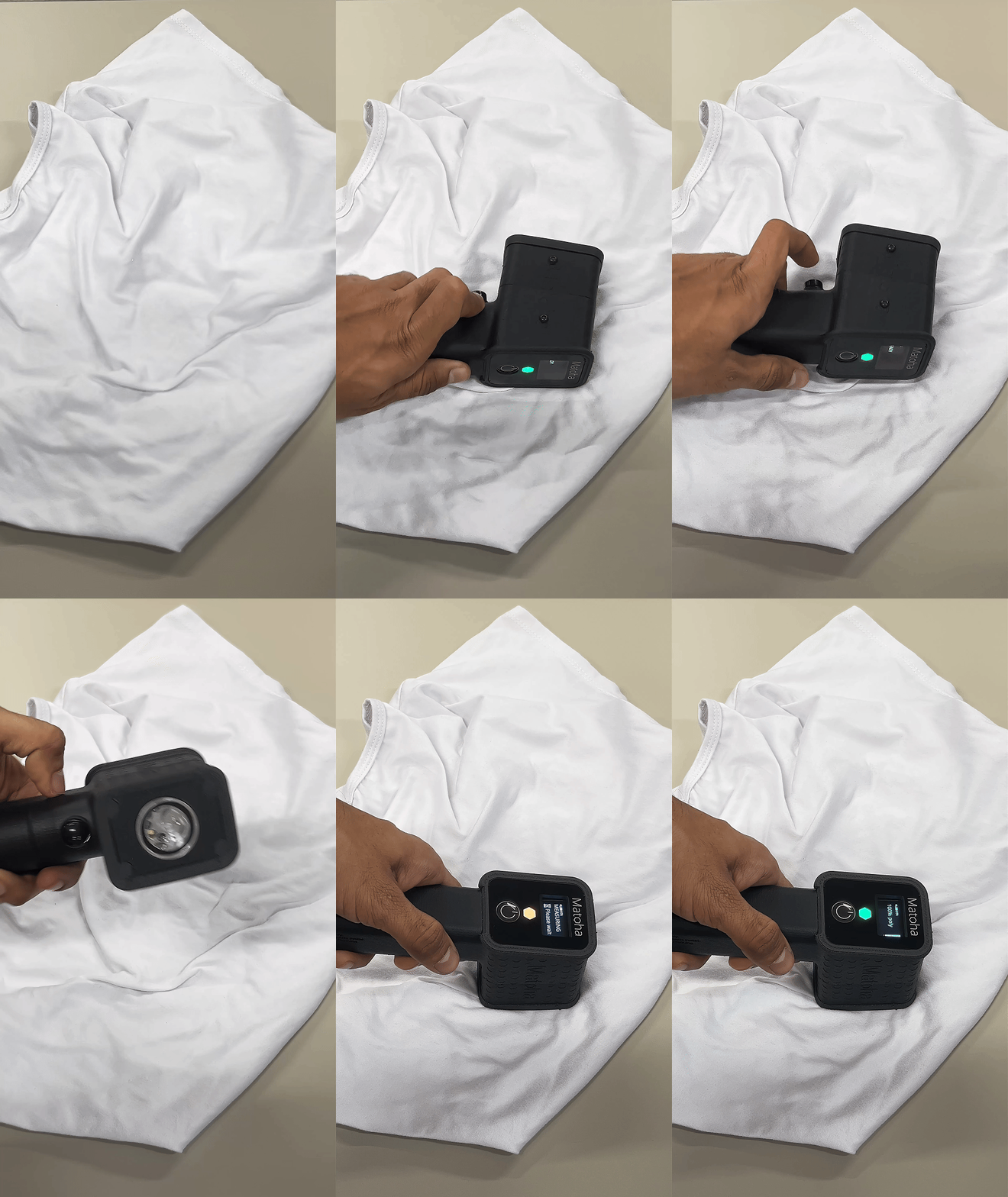
Rule 1 - Place the machine flat over any samples
The sample should be as close to the detector as possible and the machine should not be tilted with respect to the sample.
Rule 2 - Avoid prints or labels
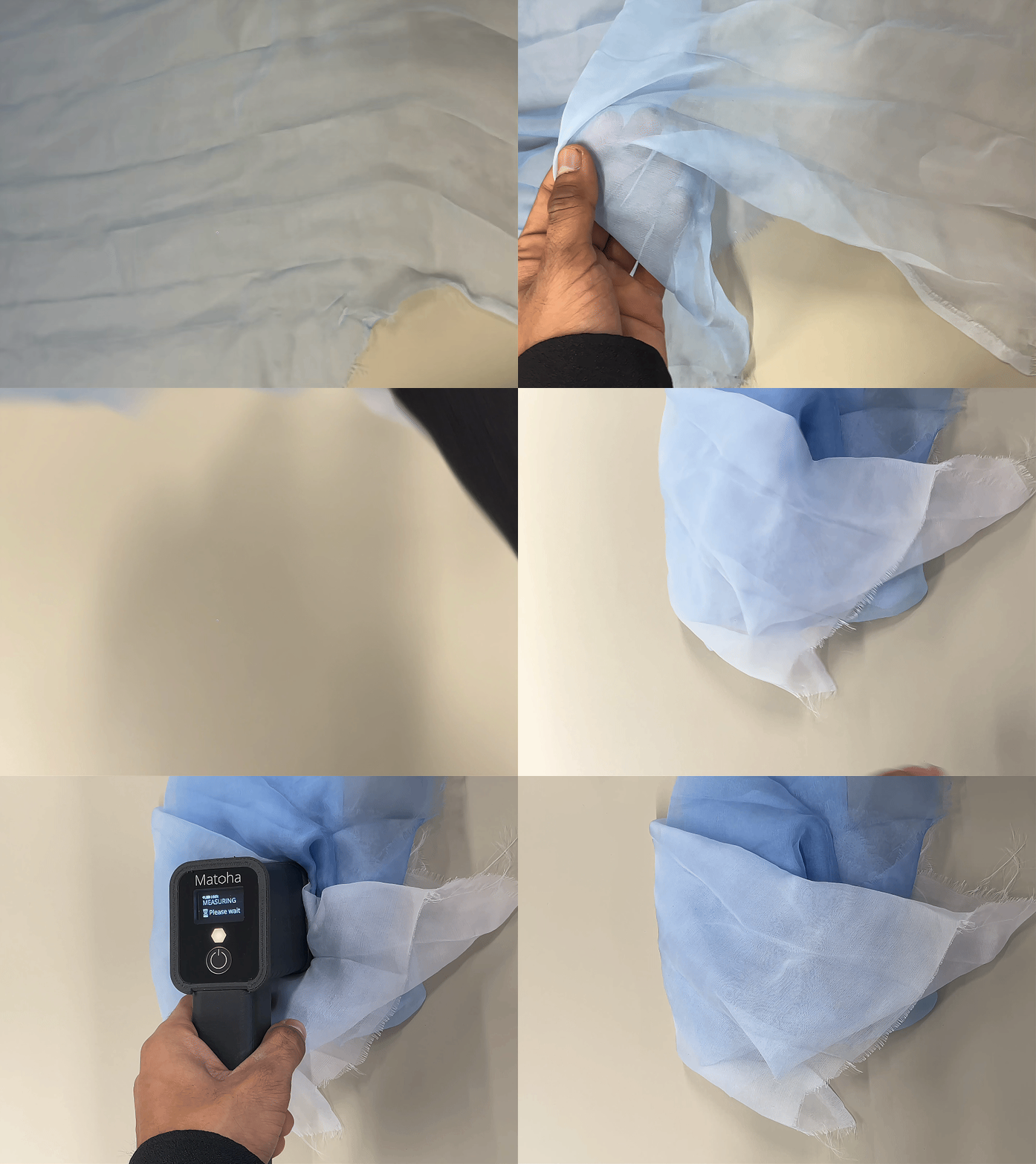
Rule 3 - Fold thin samples
Very thin plastics, such as films, should be folded before measuring. Any textiles being measured should be at least 2-3 layers thick which increases the amount of useful signal coming to the detector.
Rule 4 - Black samples may not work
Due to the carbon black pigment, most black plastics unfortunately cannot be identified.
With fabrics, the identification is typically fine for black samples but it sometimes won’t work. The pigment absorbs all the infrared light and no useful signals come to the sensor. The machine will notify you - “unknown” or “too dark”.
Rule 5 - Avoid liquids or contamination
Water or other liquids also absorb NIR light - and will negatively affect the identification.
Only measure dry samples and avoid contamination from e.g. food residues.
Rule 6 - Some samples are non-uniform
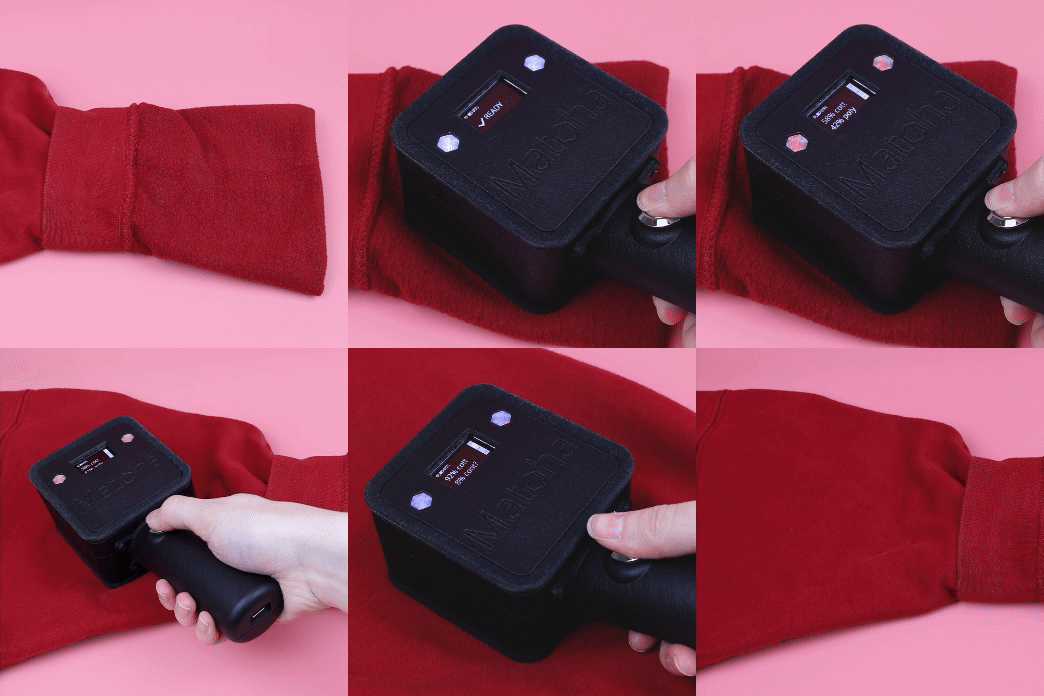
For instance, hoodies often are soft and fluffy on the inside and smooth on the outside. The label would say “60% cotton 40% polyester” but the inside is actually 100% polyester and the outside is 100% cotton.
When you scan such samples with our machine, it will say the composition of the surface - e.g. 100% cotton when you measure the outside.
Rule 7 - Measuring transparent items (PlasTell)
When measuring transparent items, please use the white target provided.
Remove the white target by sliding it out of the handheld case. Place it behind any transparent items in order to measure them.