How to Perform Measurements (Desktop and Bench)
PlasTell:
FabriTell:
If the videos do not work, click this link for PlasTell, and this link for FabriTell.
Obtaining accurate measurements
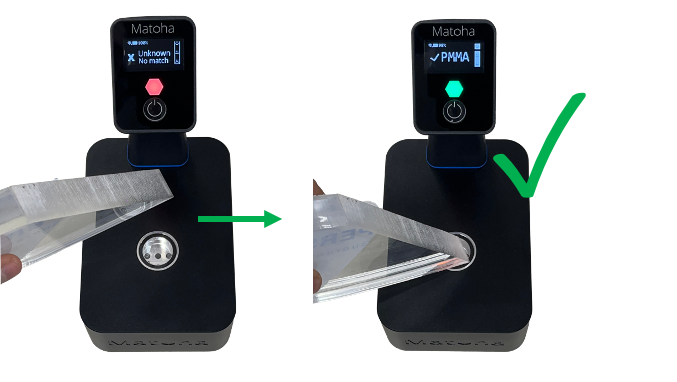
Rule 1 - Do not move the sample
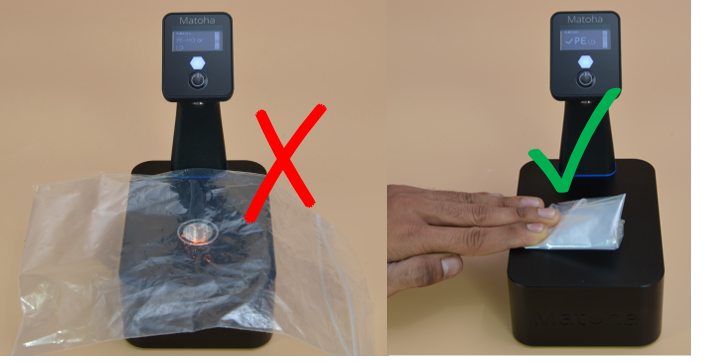
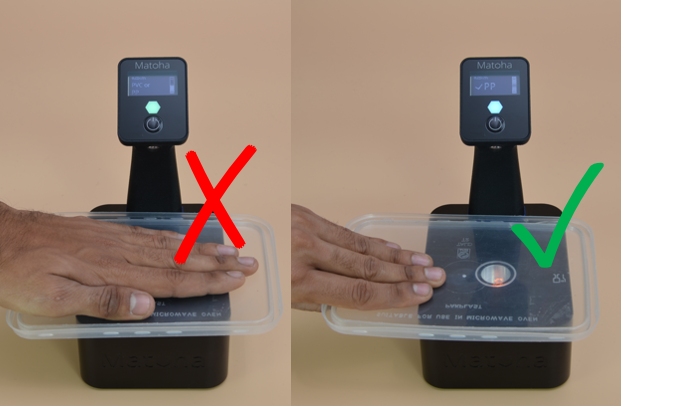
Please ensure that you do not move the sample while the machine is measuring. The machine tries to detect if you accidentally move the sample while measuring (it would show the KEEP STEADY error message). See the images above for the best way to measure - put item onto the sensor then wait.
Rule 2 - As flat as possible
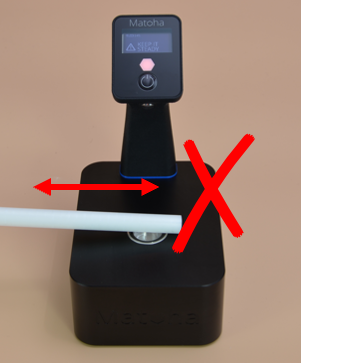
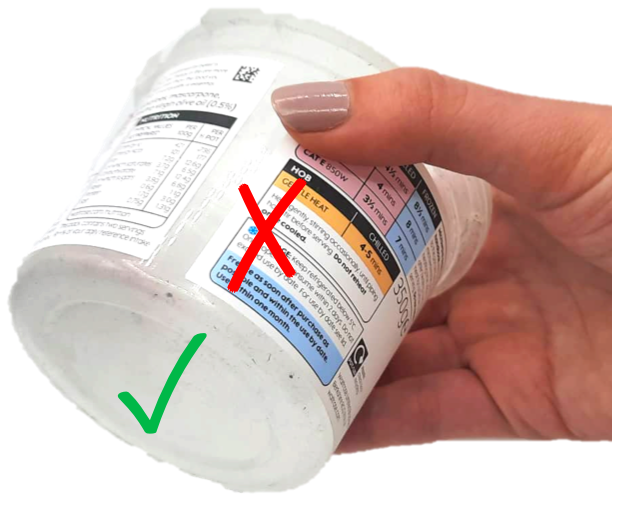
Use the flattest side of the sample - e.g. the bottom side of a yoghurt cup instead of its rounded sides. The lid in the photo is placed so that the flat side touches the sensor. The sample needs to be in contact with the sensor.
Rule 3 - Push down soft items
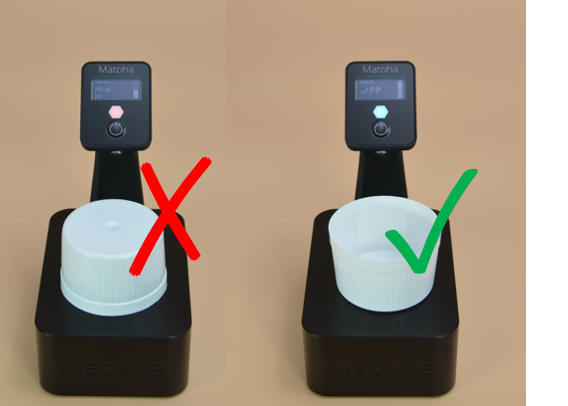
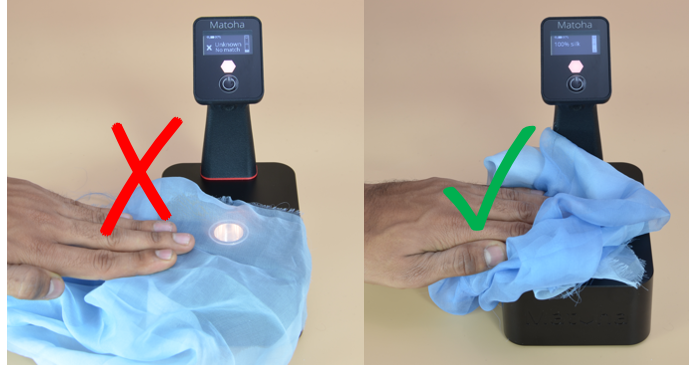
Especially with our FabriTell device, it is important you push the sample onto the sensor so that it forms a flat and continuous layer.
Rule 4 - Black and dark samples
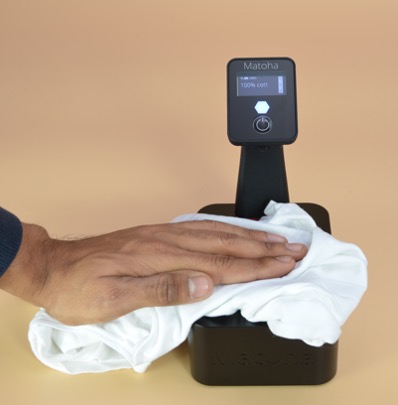
Most black and dark plastics can't be identified. This is because the manufacturers add a pigment, carbon black, which absorbs all the infrared rays and as a result, we don't observe any useful signals. This is a problem for our machine as well as for any other near-infrared machine - if you need to identify black samples you need other techniques such as FTIR or XRF. The good news is that dyes are being developed which are black yet don't prevent the identification and multiple plastic container manufacturers have now started using them so we expect this situation to improve in the future.
Most black and dark fabrics can be identified. For natural fibres (e.g. cotton and wool), black dyes are used and not pigments and there are typically no issues. For synthetic fibres (such as polyester, polyamide and acrylic) the manufacturers either use dyes (which coat the surface of the fibres) which cause no issues or pigments (which are added to mixture before spinning the fibres, such as carbon black) which do cause problems.
The machine includes a detection system for dark and black samples - the screen will show "TOO DARK".
Rule 5 - Orient small samples
Rule 6 - Don't cover transparent samples (PlasTell)
The external lamp shines light through transparent samples - and this significantly improves the accuracy for transparent samples! Make sure you don’t obstruct the beam from the external lamp like in the photo.
Rule 7 - Don't measure printed areas or labels
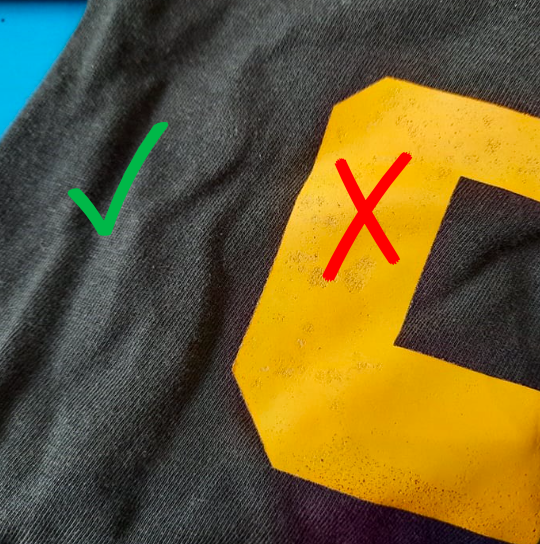
Labels and printed areas of both plastics and fabrics are often made of different material than the rest of the item. You must not measure such areas as the identification will not be accurate.
Rule 8 - Fold thin samples
Usually, the thicker a sample is, the better results can be obtained.
Rule 9 - No moisture or water
Rule 10 - Thick transparent plastics
For very thick transparent polymers, we recommend measuring across a thinner section for best results - see below.